Saturday, November 18, 2023

From pulpit to polls: Hyderabad Masjid sermon on civic obligation in elections


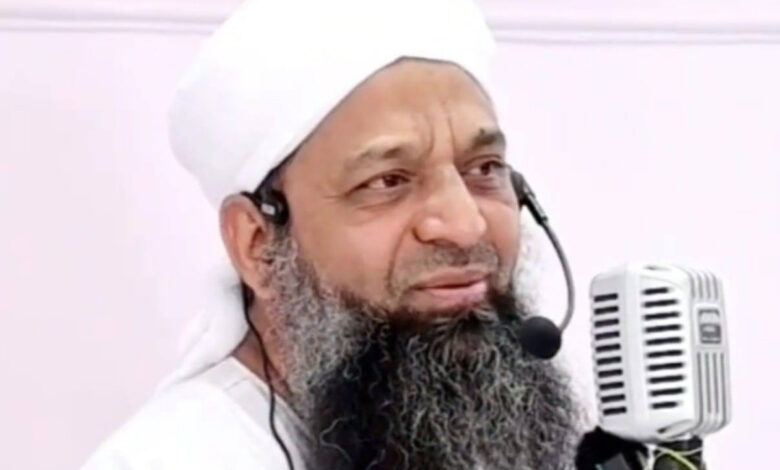
Friday sermons in mosques are usually confined to ethical and religious issues. But devotees at a mosque in Hyderabad were treated to a different subject altogether. The other day Maulana Obaidur Rehman Athar, Khateeb of Masjid-e-Teen Posh in Red Hills, waxed eloquent about the upcoming elections in the State. Instead of delving into the intricacies of religious doctrines, his khutba transcended the spiritual realm to wade into the electoral landscape.

In a voice that echoed through the packed mosque, Maulana Obaidur Rahman articulated a perspective grounded in Islamic principles, emphasizing that casting one’s vote is a sacred trust, a duty that goes beyond the temporal allure of monetary gains or other fleeting considerations.

“To accept money in exchange for your vote is to betray the very trust bestowed upon you,” he declared with unwavering conviction. His eloquence painted a vivid picture of civic responsibility intertwined with the moral fabric of Islamic teachings. “O, you who believe! Be upholders of justice, bearing witness for Allah alone,” he said quoting the Quran. In this context he urged Muslims, who are activists of different political parties, to be sincere in their approach. All their efforts should be to please Allah and not anyone else.  Only then the poll outcome would be in the community’s favour,” he said.

He steers clear of politics

Steering clear of politics, he spoke about the importance of voting and the responsibilities of citizens. Voting, in a way, is giving testimony in favour of a person or party. The way false testimony is a major sin in Islam so is voting in favour of a candidate whom one knows is not worthy.

Moreover, in Islam, one is expected to bear witness without being swayed by either monetary or any other considerations. As such one should not cast a vote in exchange for money. Otherwise, it will amount to betraying the trust, a stance firmly rooted in the principles of Islam.

“Selling of votes or the conscience is a betrayal of the trust,” The Maulana declared, setting the tone for a discourse that intertwined religious teachings with civic responsibility. His words served as a reminder that the act of voting is an ethical responsibility that aligns with Islamic principles.

Quoting the scripture and Hadith (Prophetic traditions), the Maulana encouraged a conscientious approach to the electoral process, emphasizing the role of individuals in shaping a society that reflects the principles of justice and welfare. His references to religious texts were aimed at instilling a sense of duty among the attendees, emphasizing that active participation in the democratic process is not only compatible with Islam but is encouraged when it serves the greater good.

Do not sit at home, cast your vote

He further asked Muslims to go out and cast their votes on the day of polling as failing to do so might help a wrong candidate get elected. “There is no point in grumbling about the outcome of elections and the state of affairs when you sit at home on the day of polling”, the Maulana remarked.

Stating that unity is the need of the hour, he regretted that Muslims are divided in matters of elections too. They are pitted against each other in many constituencies much to the detriment of the larger interest of the community.

The Friday sermon sought to bridge the gap between religious teachings and civic responsibilities. Without mincing words, the Maulana urged the worshippers to approach the elections with a discerning eye, guided by principles that extend beyond individual interests. The sermon also demonstrated the adaptability of religious discourse to address contemporary issues. It sure left an indelible mark on the minds of those present.

.S.Ifthekhar,
Hyderabad based journalist.

Article published in Siasat.com portal.
Dated November 18,2023

Thursday, November 16, 2023

Hyderabad’s fire mishap: Miraculous escape of two families


 It was a phone call from a friend that alerted them to the impending danger. Inayat Mirza’s heart raced as he answered the phone, his friend’s urgent tone sending shivers down his spine. Nasir always dropped in and the duo would go to Pragathi Press where they worked. On Monday morning when Nasir saw flames rising from his friend’s apartment, he immediately telephoned Inayat. The news of flames devouring their apartment ignited panic in the latter. Peering through the window, his eyes widened at the sight of a menacing red ball of fire dancing wildly.

Without losing time, Inayat sprang into action – his mind racing ahead of the spreading inferno. His first instinct was to protect his parents and other family members. Everyone was busy in the morning chores on that fateful day when a blazing fire claimed nine lives in the Bazar Guard area. As the flames started leaping up, Inayat and his elder brother, Yasar Mirza, evacuated their father, Mirza Yousuf Baig and an infant through the kitchen window broken open by the local youth. A ladder arranged by someone proved to be a lifeline to safety. Yasar carried his ailing mother safely out while other family members, including women and children, ran down the stairs even as the fire engulfed their building.

“It was a miraculous escape. Allah saved us all,” says 70-year old Yousuf Baig, his voice choked with gratitude and awe. While many perished in the fire mishap, all the ten members of Yousuf Baig’s family escaped unhurt. The family, of course, lost two bikes in the blaze but it is not unduly perturbed about it.

Even as the Mirzas were in panic, they had the presence of mind to respond to the desperate calls of their Hindu neighbour, Jai Prakash, who lived on the left side of the building which bore the brunt of the fire. While Jai ran down with his son as flames and fumes started rising, his mother, wife and youngest son escaped through Mirza’s house. “While panic gripped us, our neighbours banged the door and we let them in as our house was relatively safe,” says Yaser. Jai, who deals in tea powder, is grateful to the Mirzas for helping his family. “They are nice people,” he says.

There was no time to collect anything. The Mirzas ran out leaving the house unlocked. “Jaan bachi to lakhon paye,” remarks Yousuf Baig, who runs the popular pharmacy, City Medical Hall, in Bazar Guard.

As they reached the ground, the fire’s roar behind them served as a relentless reminder of what could have been. There was utter chaos outside with screams and shrieks rending the thick cloud of smoke. The family reunited on the pavement and couldn’t help but reflect on the fragility of existence.

Though the Mirzas survived the disaster, the tragic loss of fellow inhabitants in the devastating fire has cast a long shadow over the family. The once familiar surroundings now echo with haunting memories. The collective grief of the community permeates the air, making it impossible for the Mirzas to reconcile with the painful reminders that linger in every corner.

After shutting down their pharmacy for two days, the Mirzas are now back in business. But they have now decided to move out from the area perhaps to distance themselves from the heart-wrenching images of the tragedy.


J.S.Ifthekhar,
Hyderabad based journalist.

Article published in Siasat.com portal.
Dated November 16,2023

Friday, November 10, 2023

HHF forays into marital counselling

 The new initiative of HHF comes in the wake of rising cases of abandonment, divorce, domestic violence, health and financial insufficiency in the Jalpally area of Maheshwaram Mandal.


Ever since its inception in 2007, the Helping Hand Foundation (HHF) has been a beacon of medical assistance to the marginalized sections of society. Now it has extended its compassionate reach to the delicate realm of matrimonial disputes. What sets this initiative apart is its unique setting—a counseling center nestled within a mosque, marking a pioneering step forward in community-based conflict resolution.

Traditionally known for its swift responses to medical emergencies, the HHF’s decision to delve into marital dispute resolution reflects a holistic approach to community well-being. The counseling center, situated within a mosque, signifies a convergence of faith and practical support, embodying the spirit of unity and understanding.

The new initiative of HHF comes in the wake of rising cases of abandonment, divorce, domestic violence, health and financial insufficiency in the Jalpally area of Maheshwaram Mandal. The 28 wards in this municipal division have over 40 slums with a 50,000 population, mostly poor minorities. A survey done in this area showed that there are many vulnerable women among the widows, single and abandoned. Most of them have three and more children to take care of.

The HHF has collaborated with the Masjid Al Rehmatul Alameen near the Jalpally gate to set up an exclusive women’s family counseling and empowerment centre. Services of legal experts and religious counselors have been requisitioned to address the issues faced by the women. A help desk is also set up in the mosque to link women to all government entitlements, through Aadhaar, ration and Aaryogyasri cards, and livelihoods through skill development and facilitating SHGs in women.

“We are looking at holistic community development by providing free health care and empowerment with a focus on women and children,” says Mujtaba Hasan Askari, the man behind HHF.

In the last 45 days more than 100 cases of domestic violence have been registered at the centre. “Our main priority is to reconcile the family. The results are slow,” admits Askari.

However, a positive fall out of the counseling centre is that domestic violence has come down to a great extent since the erring husbands know there is some organization standing behind their harassed wives.

Interested persons may contact the Helpline through the numbers: 8688827566, 6303650307.

HHF already has 8 primary health care centers functioning in the Jalpally municipal limits with access to free health care. Now the newly set up family counseling centre seeks to empower women while addressing some of the social issues confronting them. “The idea is to enable them to stand on their feet and take care of themselves and their children”, says Askari.

Spread over 1500 sq. ft, the centre attached to the mosque has a separate room with adequate privacy to deal with family and matrimonial disputes. There is a separate desk to handle exclusive entitlements and facilitate the process to get Aadhaar, ration and Aaryogyasri cards. In another hall HHF has also placed twenty sewing machines and ten computers to train vulnerable women for sustainability. What’s more, a day care crèche is also provided for children of women who visit the centre. Without this facility many women find it difficult to leave their children behind, it is said.

The HHF’s foray into addressing marital conflicts is guided by the principles of the Quran and Shariah, underscoring a commitment to resolving disputes in accordance with Islamic teachings. Expert counselors, well-versed in both religious doctrines and contemporary counseling techniques, have been enlisted to navigate the complexities of marital discord.

The foundation’s decision to expand its services aligns with a broader societal recognition of the need for comprehensive support systems. Marital disputes, often fraught with emotional turbulence, can benefit from a nuanced approach that combines legal understanding with empathetic guidance. By incorporating Shariah principles into the counseling process, the HHF aims to provide not just resolutions but also healing that aligns with the values cherished by the community it serves.

This innovative initiative not only addresses immediate challenges but also fosters a culture of dialogue and understanding within the community. The mosque-based counseling center serves as a symbol of inclusivity, inviting individuals from all walks of life to seek solace and resolution within the framework of their faith.

As the Helping Hand Foundation comes full circle in its mission, it exemplifies the power of a multifaceted approach to community care—where medical emergencies and interpersonal conflicts are met with equal measures of expertise, compassion, and a steadfast commitment to a better, harmonious future.

J.S.Ifthekhar,
Hyderabad based journalist.

Article published in Siasat.com portal.
Dated November 10,2023

Saturday, November 4, 2023

Telangana: Do informed voting: SC, ST, Muslim Front


In the run-up to the upcoming Assembly elections, a Front representing Scheduled Castes (SC), Scheduled Tribes (ST), B.Cs, and Muslims has come forward with an earnest appeal to voters. Their message is clear: voters should exercise their democratic rights judiciously and resist the allure of empty political promises. The appeal stems from the disappointment of many minority communities who voted in the last elections, particularly in support of the BRS party, only to see those promises left unfulfilled.

In the previous election, the TRS party (now BRS) garnered the support of minority communities, who were swayed by promises of inclusive policies and social justice. The party pledged to provide a 12 percent reservation for Muslims, a commitment that resonated deeply with the aspirations of this community. However, as time has passed, it has become evident that these promises have not been honored.

The failure to fulfill the 12 percent reservation promise to Muslims is a stark example of political parties falling short of their commitments. This not only betrays the trust of the minority voters but also highlights a larger issue of political accountability. “When politicians make grandiose promises to secure votes and then fail to follow through, it undermines the very essence of democracy,” said Sanullah Khan, Chairman, SC,ST,BC, Muslim Front.

Addressing a press conference here on Saturday, he said the disappointment faced by minority communities was not isolated but reflected a broader trend. He drew a parallel between the KCR government and the Modi government, to show how both the administrations have not lived up to their pledges regarding minority welfare. Therefore, it is necessary to be vigilant and make informed voting,” said Front members M A Azeez (Movement for Peace and Justice), S A Qadeer, M.A. Masood (advocate).

The Forum held a round table conference at Media Plus auditorium to discuss the current political situation. Later speaking to presspersons the members said during 2014 and 2019 elections, minorities, particularly Muslims unitedly voted for BRS since Telangana was a long standing dream. They were also lured by KCR’s promise to implement 12 percent reservations to Muslims within six months. But till date the promise remains unfulfilled. No concrete steps were taken during the last nine years to improve the educational and economic status of Muslims. The Front members also blamed the BRS government for failure to protect the Wakf properties. Likewise the government failed to appoint a Muslim vice-chancellor and a Muslim member in the State Public Service Commission. This apart the Alair encounter of Muslim youths and many such other things have increased the mistrust of minorities over the years. Empowerment of Muslims through electoral representations also remained a pipedream.

The Front leaders urged voters to carefully study the manifesto of different political parties before exercising their vote. Some members felt the Congress should be given a chance since the party has remained away from power for so many years. They wanted voters to look beyond the superficial allure of political campaigns and examine the track record and sincerity of the candidates and parties they wished to support.

J.S.Ifthekhar,
Hyderabad based journalist.

Article published in Siasat.com portal.
Dated November 4,2023


Sunday, October 22, 2023

Imran Pratapgarhi uses Iqbal’s ‘Lab pe aati hai dua…’ to portray plight of Palestinians


As the Israel-Palestine war rages on,  poet, Imran Pratapgarhi, comes out firing on all cylinders.  And he does it with the only weapon at his disposal- lyrical prowess. He succeeds in igniting emotions with his poignant and moving verses. His new nazm mirrors the pain and suffering of Palestinians like nothing else.

The renowned bard known for his protest poetry paints a vivid picture of the suffering and anguish being experienced by the Palestinian people, drawing a somber parallel to the iconic poem Lab pe aati hai dua by Allama Iqbal.

As the world is shocked by the relentless turmoil in Palestine, Imran Pratapgarhi takes up the pen to channel the collective pain and torment of the Palestinians. His latest nazm is a haunting testament to the enduring struggle for justice and freedom in the embattled region

The poem, inspired by the timeless work of Allama Iqbal, rekindles memories of Lab pe aati hai dua, which has resonated with generations of poetry enthusiasts. However, Pratapgarhi’s composition breathes new life into this revered tradition of Urdu poetry by addressing the contemporary Palestinian predicament. Sample the verse:


Lab pe aati hai dua bun ke tamanna meri

Sun le tu aaj ye fariyad Khudaya meri


Tere mehboob ne jis simit kiye the sajde

Hukum se tere wo ashabe Nabi ke sajde

Sainkadon gham lye seene main hai ghamgeen khada

Ab faqat tere sahaare hai Falasteen khada

Kash duniya samajh pati ye jhagda kya hai

Aap ke ghar pe kisi ghair ka khabza kya hai

Tu jo chahe to har ek baat ko bahtar karde

Ek nazar daal ke halaat ko bahtar kar de

Imran Pratapgarhi’s words serve as a stark reminder that the issues of the past still linger in the present. His poem seeks to shed light on the illegal occupation of the Palestine land and the painful reality of life in the conflict-ridden region. Through his touching verses, he unfurls a tapestry of human suffering, resilience, and hope in the face of adversity.

The last stanza of the poem takes the breath away and moves one to tears. In a throwback to the Quranic story of Ashabe Feel (105th chapter) when Allah destroyed the army of pagans which came riding on elephants to raze down the Ka’ba. But the King Abraha army was destroyed by the huge flocks of Ababeel ( Common Swift bird) sent by Allah which dropped tiny stones of baked clay over elephants. See how Imran Pratapgarhi uses the historical event to plead the cause of Palestine. He says:


Doodh-mohe bachon ke bhi khwab huva Karte hain

Jung karne ke bhi aadab huva karte hain

Hum nahin kehte hamein koee paiyamber dey dey

Tere hi aage jo jhuke hum ko sar de de

Lashkare feel jahalat pe utar aaya hai

Aye Khuda phir se ababilon ko kankar de de

Kaun kehta hai nafrat se chalegi duniya

Tu dikha de ke mohabbat se chalegi duniya

What stands out in the whole nazm is the poetic genius of Imran Pratapgarhi and his ability to capture the raw emotions of the Palestinian struggle along with the depth of their aspirations. His words bridge geographical and cultural gaps, connecting people from all walks of life with the shared yearning for peace and justice.

In a world where the Palestinian-Israeli conflict continues to be a subject of debate, Imran Pratapgarhi’s new composition transcends boundaries and resonates with the hearts of those who yearn for an end to the suffering of the Palestinian people. Moreover his poem serves as a poignant reminder of the power of poetry to transcend borders and touch the core of our collective humanity, offering solace and solidarity to those whose lives have been forever altered by the tumultuous events in the region.


J.S.Ifthekhar,
Hyderabad based journalist.

Article published in Siasat.com portal.
Dated October 22,2023

Thursday, October 12, 2023

Shahmiri’s imagist poetry: A soul-stirring journey through words


 In the realm of literature, the power of words is undeniable. They can create, inspire, console, and incite. What matters is how one wields them. In the hands of an expert poet words can become a soothing balm or a sharp blade.

Prof Muzaffar Ali Shahmiri, however, chooses to differ. He uses the power of words not to make or mar, heal, or hurt but to awaken the depths of human consciousness. He skillfully sifts the chaff of obfuscation through his linguistic prowess to reveal the kernel of truth.

The other day he cast a spell on the audience through his imagistic poetry. He left the circle of Urdu aficionados, who gathered at Lamakaan for the Bazm-e-Sukhan session, bemused and shell-shocked with his typically short free verse poems. No, there is no talk of gul-o-bulbul, saqi-o-maikhana or passion for lovelorn in his poems.  Breaking away from the rules of bahr (meter), matla and maqta (the first and last sher), Shamiri’s poetry takes on a whole new format. He doesn’t beat about the bush but comes to the subject directly. The words are succinct and to the point – evoking concrete images.

Sample this poem:


Jub tumhari nazr

Rangon mein farq karna bhool jaye

Aur jub wo

Har rang  mein

Ek hi rang dhoondne lag jaye

To samajh lena ke

Duniya ko be-rang hone mein

Ab ziada der nahin lage gi

One can draw any inference from this poem. It can be about the state of affairs in the present regime or any other thing.  Shahmiri leaves it to the reader’s imagination

A former Vice-Chancellor of Dr. Abdul Haq University in Rayalaseema, Shahmiri is now dishing out poetry enriched with vivid imagery and raw emotion, a testament to the transformative potential of the Urdu language. His verses are laden with pain, anguish, and suffering, yet they speak in a voice that is uniquely powerful and poignant. The wordsmith meticulously chooses each word to convey the depths of human emotion, making his poetry a cathartic experience for readers.

“I can write poetry only this way. I can never think in words but only in images,” says Shahmiri, who is influenced by American poets, Ezra Weston Loomis Pound and Hilda Doolittle. For the last four decades, he has been writing imagist poetry which he calls in Urdu ‘Paikari Nazm’ packing complex emotions into concise verses. Brevity is the soul of wit. And sure enough one can find the economy of words in his poems – which are both refreshing and impactful. For instance, he translated Ezra Pound’s famous poem ‘In a Station of the Metro’ in just 12 words, two less than the words used by the legendary poet.

Are such poems never written in Urdu? Yes, they are. But they are written under ‘Nasri Nazm’ (prose-poem) category. Shahmiri wants such poems to be separated and given a new identity since imagist poetry is distinguished by concrete words, concrete images, and clear-cut ideas. There are no metaphors or similes here – only images to evoke sensory perceptions. Read this poem which is a good commentary on the present times.

Tum agar apne desh ko

Peechey lejana chahte ho to lejao

Tumhari marzi

Magar itna yaad rakho

Ke peachy-peechey jate jate

Itne peeche na chale jana ke

Pathar ka zamana aajaye

This short poem like many of his other verses evokes a wealth of feelings. The reader is left to ponder and reflect on the essence of the human condition.  Shahmiri makes a telling commentary about the insensitivity of the powers-that-be in this poem – Aur More Nachta Raha (And the peacock kept dancing). Sample some lines:

Saari zamin dal-dal ho rahi thi

Aur more nachta raha

Shab-o-roz bijlian

Zamin mein dhans rahi thi

Aur more nachta raha

Zaherli hava mein

Insan hava ko tarasta raha

Aur more nachta raha

Hatta ke uski apni zamin bhi

Khisakti rahi

Aur more nachta raha

What distinguishes Shahmiri’s poetry is its directness. There are no convoluted metaphors or obscure allusions; his words pierce through the heart with the precision of a surgeon’s scalpel. In a world inundated with complexities and obscurities, his straightforward approach is like a breath of fresh air. His poetry is a lifeline for those seeking solace and understanding.

Prof. Shahmiri’s forthcoming book ‘Paikarah,’ is full of imagist poetry. This collection is a treasure trove of emotions conveyed through the prism of vivid and precise language. Usually a book is first published, reviewed and then presented to public. But Shahmiri has chosen the other way round. He presented a select few poems from his yet-to-be-published work and sought to know the people’s reactions. The book promises to be a poignant exploration of life’s complexities.

The rhythm and flow of words contribute to the effectiveness of his poetry. Shahmiri’s verses have an almost musical quality that resonates with readers on a visceral level. They invite them to embark on a journey through the labyrinth of human emotions..

J.S.Ifthekhar,
Hyderabad based journalist.

Article published in Siasat.com portal.
Dated October 12,2023

Tuesday, October 3, 2023

Muslim Personal Law Board not to support any political party in upcoming elections


This influential Muslim panel has made it abundantly clear that it will not be taking sides in the upcoming elections nor endorsing any political party. Instead, it likes to focus on a message of unity and social harmony, calling for voting out forces that spread hatred.


In the run-up to elections, when political parties vie for support and endorsements from various groups and organizations, the All India Muslim Personal Law Board (AIMPLB) has chosen to remain neutral. This influential Muslim panel has made it abundantly clear that it will not be taking sides in the upcoming elections nor endorsing any political party. Instead, it likes to focus on a message of unity and social harmony, calling for voting out forces that spread hatred.

The AIMPLB, under the leadership of its president, Maulana Khalid Saifullah Rahmani, has resolved to maintain a steadfast commitment to its core mission of safeguarding the personal laws and rights of Muslims in India. Therefore, its stance on elections transcends political considerations and delves into the realm of social responsibility.

By refraining from endorsing any specific political party or candidate, the Board would like to ensure that it remains an impartial and inclusive organization. This position is in tune with the democratic ethos of the country, where every citizen has the right to make their own political choices based on their beliefs and values.

“The Board wants to underscore the importance of electing leaders and parties that prioritize social cohesion and national unity over divisive rhetoric,” is all that Maulana Rahmani would say.

The Board’s decision not to instruct Muslims on how to vote reflects a commitment to the democratic principles of individual agency and choice. It trusts the electorate to make informed decisions based on their own assessment of candidates and parties, rather than imposing a top-down endorsement. By advocating removal of hate-driven forces, it sends a powerful message that goes beyond politics and underscores the importance of unity in a diverse democracy.

Stick to Sharia

Under the present situation when attempts are being made to interfere in the personal laws of the community, Maulana Rahmani wants Muslims to strictly adhere to the Sharia principles. They should voluntarily enforce the Sharia doctrine in their life no matter what law the government enacts. Be it marriage, divorce, khula or inheritance Muslims should follow the Sharia in letter and spirit. Sharia has fixed the share of sons to double that of daughters in inheritance. If the law of the land says otherwise Muslim women should insist on taking only that much share which Sharia gives them, even if there is a worldly loss. “Such a spirit towards Sharia needs to be developed in these challenging times when attempts are on to deprive Muslims of their personal laws,” he remarked.

He called on the community to work to build bridges of friendship with fellow countrymen. Every Muslim should develop good relations with at least five non-Muslim brethren. They should engage with members of other faiths and share their joys and sorrows. In keeping with the Islamic morals, they should respect elders, women and show compassion to children belonging to other religions. This will create a ripple effect of goodwill across the country in a short span of time.  Such a move will also dispel misconceptions about Islam and help build a tolerant society.

Citing the example of the Prophet of Islam, he called the community to reach out to the oppressed regardless of their beliefs. In matters of human rights, Islam doesn’t make any distinction on the basis of religion. Wherever there are riots be it in Gujarat or Manipur, Muslims should stand by the victims. Muslims are not the only oppressed community in India. Other minorities, particularly Dalits, are also being targeted. The condition of Dalits is more pitiable as they are not even considered human. Even if a Dalit becomes the country’s President, he can’t enter the temple.  “This is an insult to humanity, and it is the duty of Muslims to stand by all those who are wronged,” Maulana Rahmani said.

J.S.Ifthekhar,
Hyderabad based journalist.

Article published in Siasat.com portal.
Dated October 3,2023

Popular Posts

New1